
Skip to content

Crockery unit designs for your dining room — ideas that work, real costs

Ideas we have tested on real crockery units in Bangalore — how each one is made, what it costs, and when it is the right choice.

Tall crockery unit

A full-height crockery unit — partly open, partly closed — gives far more storage than a low unit, and can be styled endlessly. Don’t shy away from going tall.
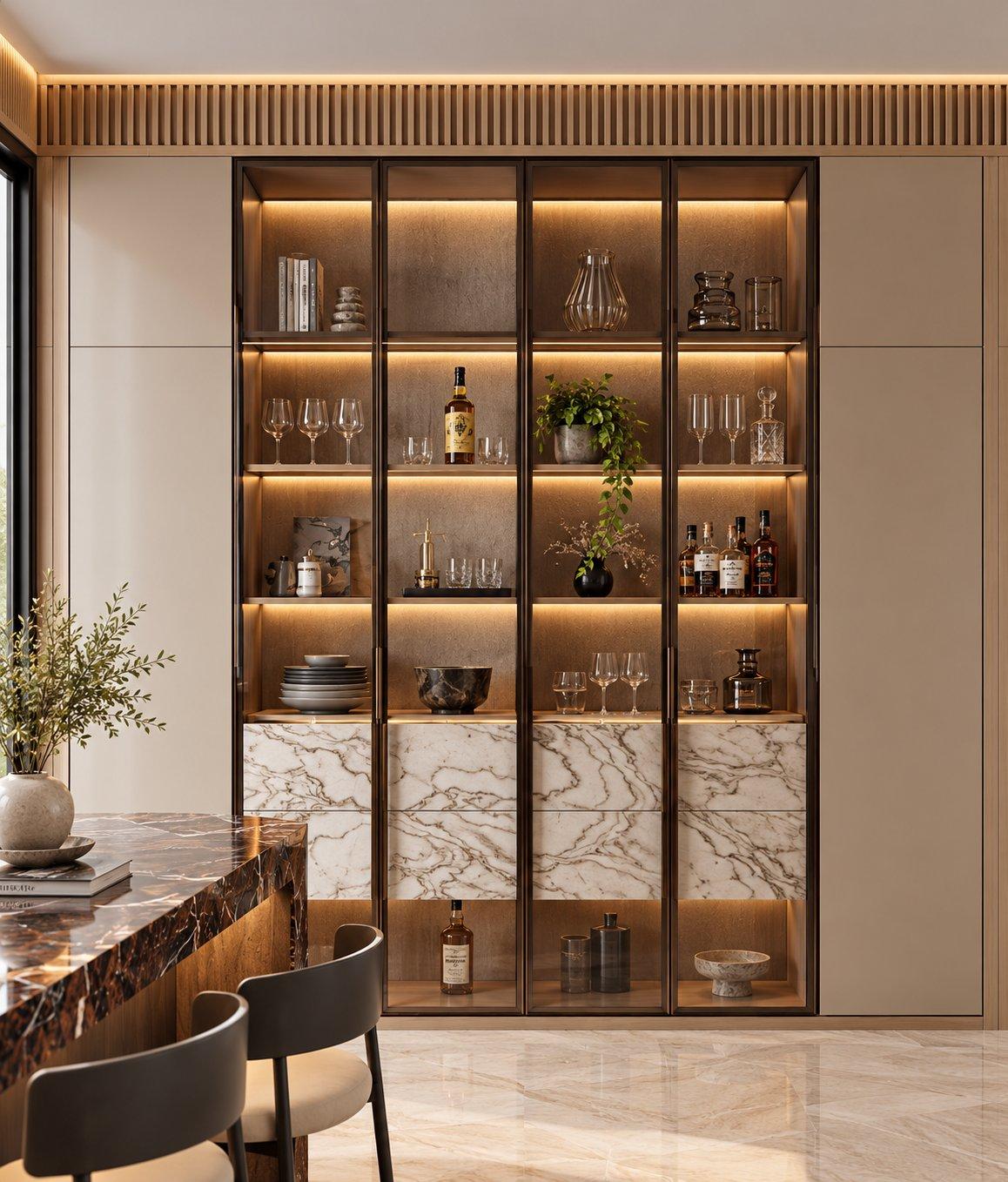
2026 crockery unit design idea: tall floor-to-ceiling crockery unit with lit glass shelves and marble-finish drawers — Willow Interiors concept render
Concept render · Willow Interiors, 2026

Should a crockery unit be tall or low?

Go tall, unless you need a countertop. A full-height crockery unit gives ample storage. Choose a low unit with a counter only if you will use it for appliances, or if it sits right next to the dining table and you need somewhere to put hot dishes.

What is the best crockery unit design for storage?

A tall crockery unit that is partly closed and partly open. You get plenty of hidden storage, plus open or glass sections to display your best pieces.

How can you make a crockery unit look beautiful?

There are many ways — combinations of laminates, a quirky design, or a printed laminate or wallpaper on the back panel behind the shelves.

How much does a crockery unit cost?

A tall crockery unit costs about the same as a wardrobe — roughly ₹1,600–2,200 per sq ft. It costs more than a low unit simply because it covers a larger surface area.

Glass or solid shutters for a crockery unit?

Either, or both — it depends on how much of your crockery you want on display. Use glass where you want to show pieces off, and solid shutters for everything else.

Is lighting inside a crockery unit worth it?

Yes, always — and especially with glass shutters, where the light shows off what is inside.

Cost at a glance

Tall crockery unit≈ ₹1,600–2,200 per sq ft
ShuttersGlass, solid, or a mix
LightingAlways worth adding

Bangalore prices, October 2026. Same range as a wardrobe; depends on the design.
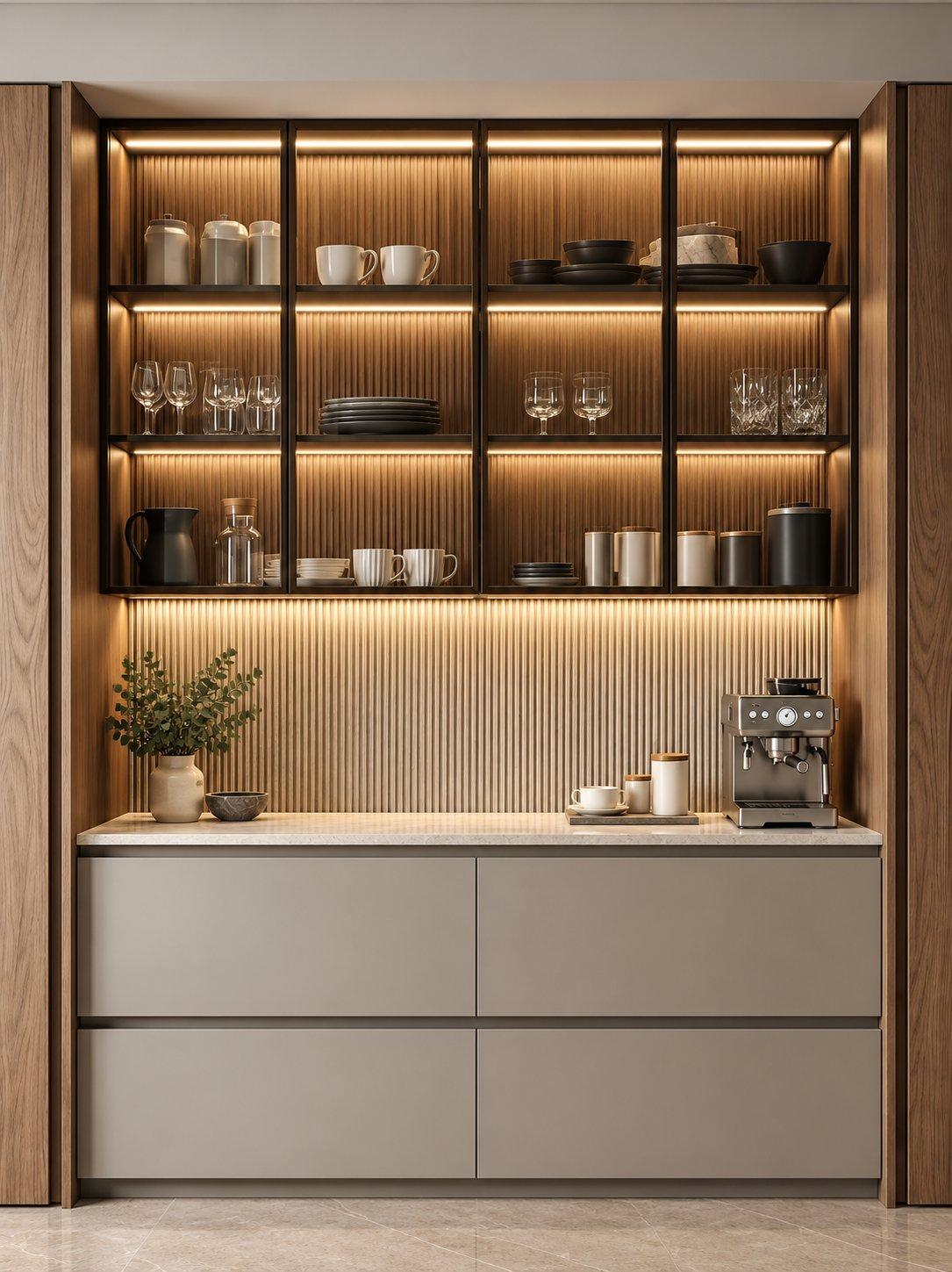
Crockery unit with a counter

The classic crockery unit: a base unit with a large countertop and a taller-than-usual wall unit above — finished with end panels on both sides, so it looks like dining furniture, not a second kitchen.

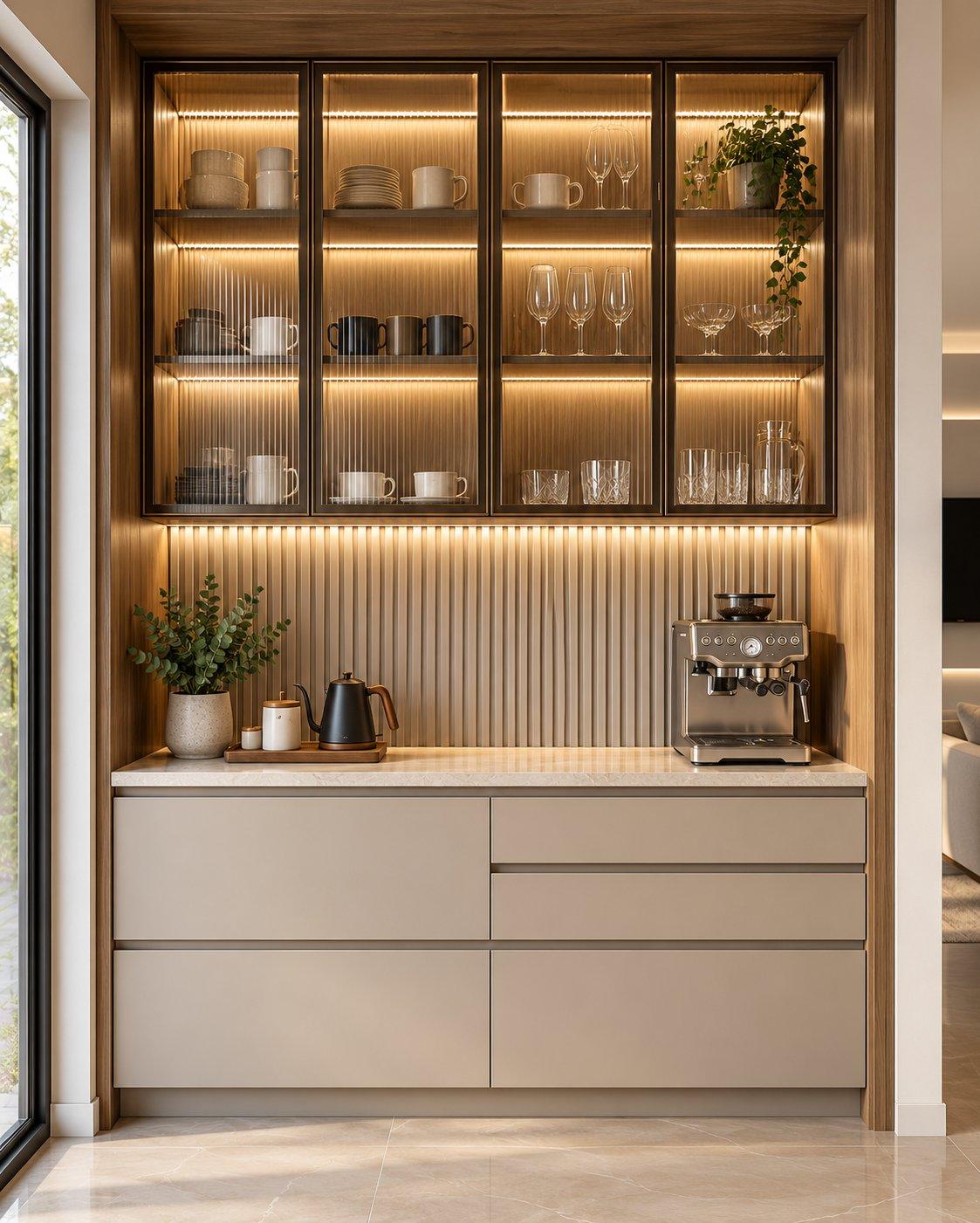
2026 crockery unit design idea: crockery unit with a stone counter, drawers below and a tall lit glass wall unit above — Willow Interiors concept render
2026 crockery unit design idea: crockery unit with a stone counter, three drawers and a fluted-glass wall unit with lighting — Willow Interiors concept render
Concept render · Willow Interiors, 2026

What is the difference between a crockery unit and a kitchen cabinet?

Where it sits and how it should look. A kitchen has its own base, wall and loft units. A crockery unit sits in the dining area, connecting the living room and the kitchen — so it should look premium, like furniture. Never treat your crockery unit as your kitchen.

Why does a crockery unit need end panels?

Without them it looks like just another kitchen. Cover both ends of the base unit and the wall unit with separate panels, and never leave the end of the countertop open — only then does it look like a crockery unit.

If the unit sits inside a niche, the walls cover its ends. But that is rare in flats, where it usually stands against a plain wall — so add the two extra panels.

Why choose a crockery unit with a countertop?

For the large counter. It is useful for putting down hot utensils, for serving, and for appliances.

What storage can go in the base of a crockery unit?

Anything a kitchen base can have — tandem drawers, plain shutters, wooden drawers, even rice pull-outs — in any combination, depending on the size and space available.

How do you make a crockery unit look premium?

Make the wall unit above the counter taller than the usual 2 ft. A taller wall unit gives the crockery unit a premium look and makes the space feel bigger — and add end panels on both sides.

How tall should the wall unit above a crockery counter be?

Ideally, take the wall unit right up to the ceiling. If the ceiling is very high — as in many independent houses — keep the whole crockery unit about 8 ft tall, which makes the wall unit about 900–1,000 mm (roughly 3 ft) high.

Which countertop is best for a crockery unit?

Quartz, granite — any good stone works. What matters is choosing the material carefully and always going for a branded stone.

What adds to the cost of a crockery unit with a counter?

Mainly the accessories you add inside it and glass shutters — both push the price up.

Cost at a glance

Wall unit heightUp to the ceiling — or ≈ 900–1,000 mm in an 8 ft unit
Usual wall unit height≈ 2 ft (go taller)
CountertopQuartz, granite or any branded stone
Adds to the costAccessories, glass shutters

Bangalore, October 2026.

Bar-style crockery unit

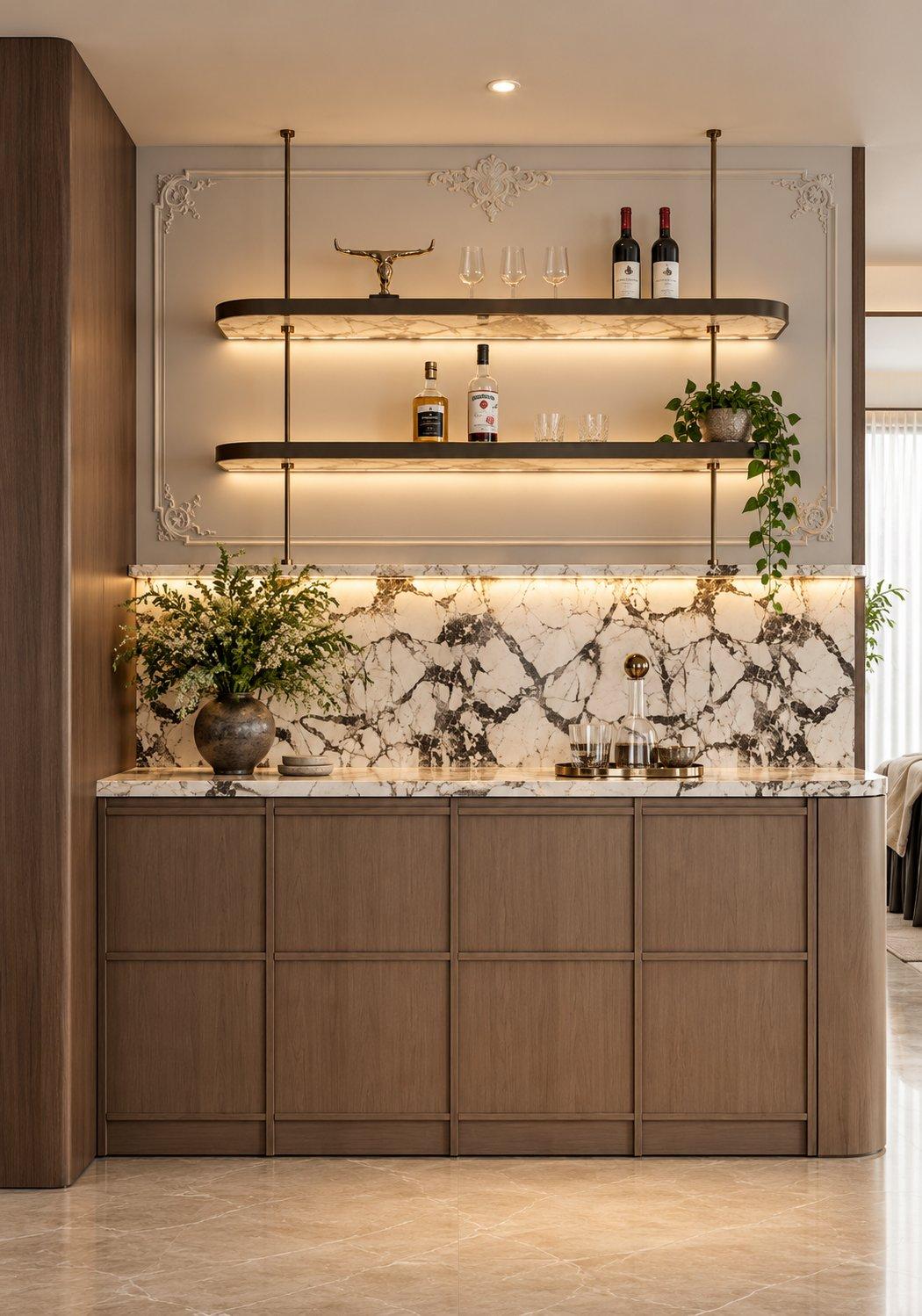
A crockery unit designed like a bar unit — counter below, lit open shelves with metal accents above. It makes the dining space feel airy and spacious, and you don’t need to keep alcohol to have one.

2026 crockery unit design idea: bar-style crockery unit with a marble backsplash and lit floating shelves on metal rods — Willow Interiors concept render
Concept render · Willow Interiors, 2026

Can a crockery unit look like a bar unit?

Yes — and it is an excellent choice. A crockery unit merged with the design of a bar unit is, in effect, a bar unit. You don’t need to drink or keep alcohol to have one; it simply holds your crockery in a more open, elegant way.

How does a bar-style crockery unit make a dining area look bigger?

Above the counter it usually has open shelves with lighting rather than a closed wall unit. That makes the whole space look more airy and spacious.

Are metal supports good for open shelves?

Yes. Metal accents — such as rods holding the shelves — give the shelves better support, and they look great. We personally love metal accents wherever open shelves are used.

Is a bar-style crockery unit cheaper than a regular one?

No. It has a back panel, and the metal accents cost more — especially with a PVD coating for that extra sheen and shine. It is not the budget option, but it adds real character to the space.

Are open shelves practical for crockery? Don’t they collect dust?

They do collect dust. The fix is to use fewer shelves — two, not ten — and keep them shorter rather than running the full width. Less open surface means much less to dust.

Is there such a thing as zero-maintenance interiors?

No. Everything needs some maintenance — open shelves, glass, wood, stone, even laminate. The right question is how much maintenance a design needs, and whether its look is worth it to you.

Cost at a glance

Compared with a regular crockery unitCosts more — not a budget option
What adds to the costBack panel, metal accents, PVD coating
ShelvesTwo short shelves, not ten full-width ones

Bangalore, October 2026.

Stone-clad crockery niche

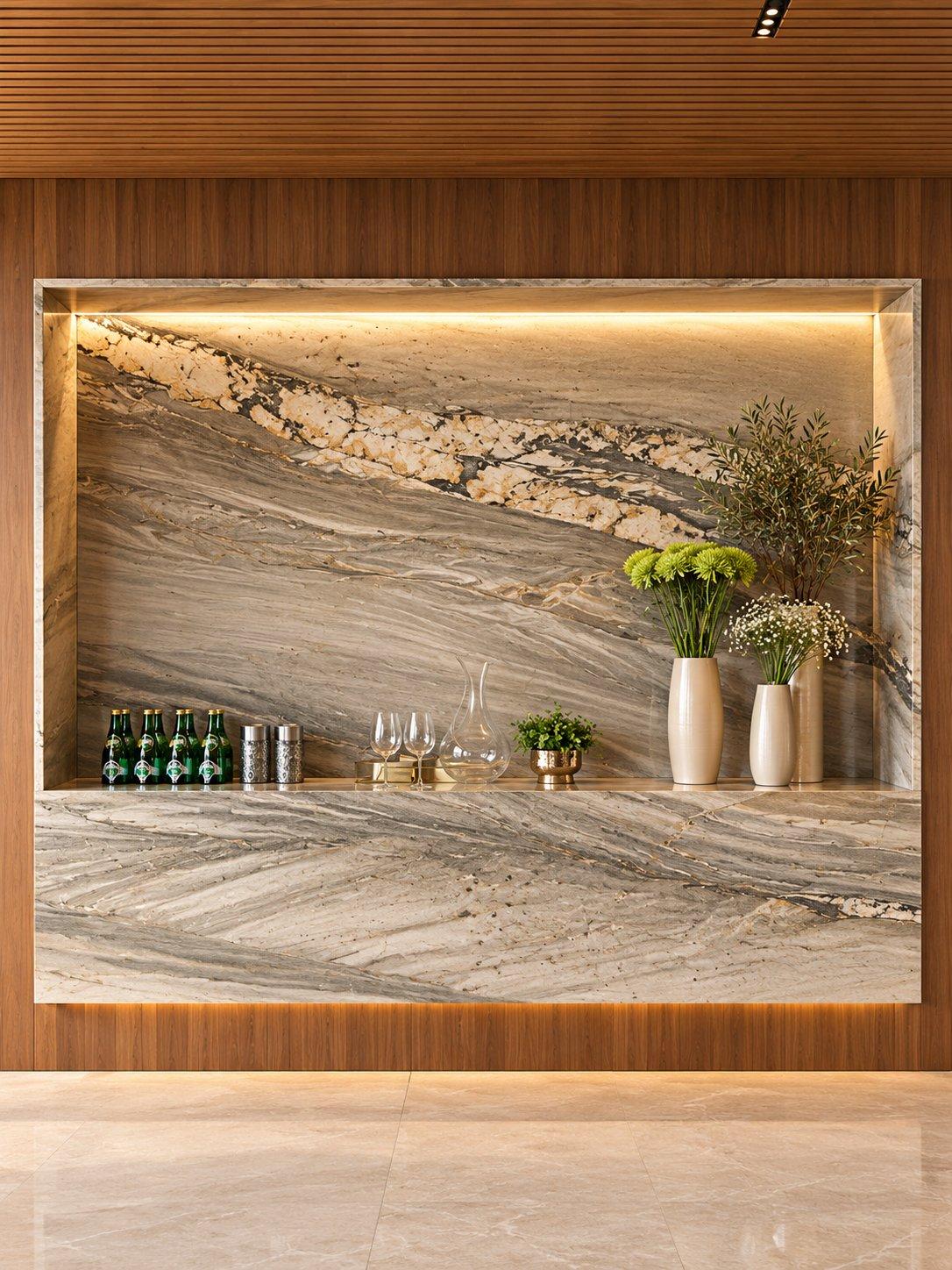
A crockery niche lined in marble, stone or terrazzo, with a lit shelf. Little storage — but in a spacious home it makes the dining area look bigger, airier and truly luxurious.

2026 crockery unit design idea: crockery niche clad entirely in veined marble with a lit shelf, set into a wood-panelled wall — Willow Interiors concept render
Concept render · Willow Interiors, 2026

What is the best crockery unit design for a niche?

Line the niche itself in stone — marble, textured stone or terrazzo — with a lit shelf. Because it sits inside the niche, it looks seamless instead of projecting out, and the space looks more open.

Is a marble crockery unit a good idea?

In a spacious home, yes. Marble throughout makes the dining area look much bigger, airier and more premium. The downside is that it gives little storage and is less usable — so choose it only when storage is not a concern, such as a home with a large kitchen.

What materials can a crockery unit be made of besides wood and laminate?

Marble, other natural stones, textured stone and terrazzo — in any colour. Switching to a different material while keeping the overall look plain and simple adds real character to the space.

Cost at a glance

Best forSpacious homes with a large kitchen, and a niche for the crockery
MaterialsMarble, natural or textured stone, terrazzo
Trade-offLittle storage — less usable

Bangalore, October 2026.

Which crockery unit design should you choose?

Go tall if you want storage; choose a counter if you need space for appliances or hot dishes; go bar-style or stone-clad if the look matters more than storage. Whichever you pick, treat it as dining-room furniture, not a second kitchen. Crockery units cost about ₹1,400–1,600 per sq ft to start and can go up to ₹3,000–3,500 per sq ft, depending on the design and materials.

IdeaBest for
Tall crockery unitMaximum storage
Crockery unit with a counterAppliances, serving, hot dishes
Bar-style crockery unitAn airy, open look with character
Stone-clad crockery nicheSpacious homes with a niche

Bangalore prices, October 2026. Cost ranges from about ₹1,400–1,600 to ₹3,000–3,500 per sq ft, depending on design and materials.

Want one of these in your home? We’ll tell you what it costs for your size.